- Angel Soria
- Brand Blog, Brand Experience Lab, Career Story, Phoenix Children's Hospital Foundation
Honeywell taught me I could make complex technology human.
Phoenix Children’s gave me the chance to make meaningful work feel human.
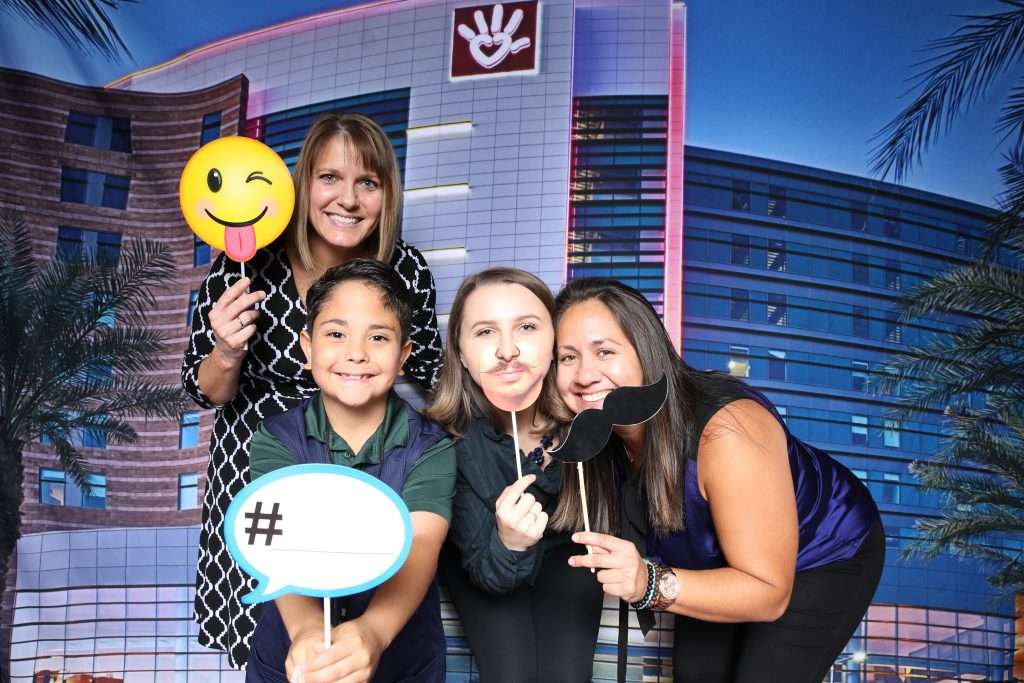
After taking a legacy aerospace brand into new territory, I was ready for something closer to the heart. Phoenix Children’s—the largest children’s hospital in the Southwest—overflowed with stories: patients, families, doctors, nurses, volunteers, donors, therapy animals, community partners.
The challenge wasn’t finding something worth talking about.
It was figuring out how to tell those stories with the right balance of strategy, sensitivity, and genuine joy.
I brought the same rigor from aerospace—content planning, audience thinking, performance, systems—into a completely different environment. But here, the work wasn’t about engines, flight paths, or connectivity.
It was about hope, healing, and community.
And that changed everything.
Some stories were big. Others were small moments that would never show up in a corporate campaign brief—a pro athlete visit, a therapy animal making someone’s day, a child lighting up during an event, a piece of content that made a family feel seen. For the numbers behind the work—from Power Play to Give-A-Thon and the year-end social revenue growth—check out the case study here.
Those moments mattered just as much as the numbers.
What kept me connected to the work were the patients and their families—taking something institutional and making it feel personal, accessible, and alive. UTMs kept the social revenue connected where it mattered—different programs for different patients and their families.
Did you know they even have a chaplain? We shared his impact on social, too.
I got close with some of those families through interviews, then started asking if they wanted to serve as ambassadors at partner events. I stayed connected through DMs, engaged with them on social, and built relationships beyond the original story. The Foundation hadn’t really worked that way before, so it was an overhaul for both of us—social wasn’t just broadcasting stories; it was building a community with the people behind them.
And every time I walked through those hospital doors, my life shifted—fast. Whatever problems I carried in with me suddenly felt minuscule compared to what these little warriors and their families were facing. That perspective never left me.
Phoenix Children’s also reinforced something I’d been learning throughout my career: the strongest brands don’t just broadcast.
They build relationships.
They show up in the community. They create systems that make storytelling easier. They understand that engagement isn’t just a metric—it’s a signal that somebody stopped, felt something, and decided to connect.
Honeywell had stretched my ability to translate complexity.
Phoenix Children’s stretched my ability to translate purpose.
And after years of learning how to make brands more human, I was about to face a new challenge: making social work at scale inside one of the largest, most regulated organizations of my career.
Edward Jones was next—not just a new chapter, but a whole new Rubik’s Cube.